
POTS Syndrome: Symptoms, Causes, Diagnosis and Daily Management
POTS syndrome: A condition where the heart rate rises abnormally fast (30+ bpm in adults, 40+ in teens) within 10 minutes of standing, without a big blood pressure drop, along with symptoms like dizziness, fatigue and brain fog.
You stand up from the sofa to answer the door. Within seconds, your heart is pounding, your head feels light and fuzzy, and the room seems to tilt. You grab the nearest wall and wait for it to pass. Then it happens again the next day, and the next.
If that sounds familiar, you may be wondering whether something is seriously wrong. For many people, the answer is POTS syndrome, short for Postural Orthostatic Tachycardia Syndrome. It is a real, recognised condition that affects how your body handles standing upright. It can be frustrating and exhausting, but it is also manageable, and many people improve over time.
This guide explains what POTS is, what causes it, how it’s diagnosed and treated, and how to make everyday life easier. It’s written for newly diagnosed patients, family members and anyone searching for answers. It’s general information, not a substitute for personal medical advice.
What Is POTS?
POTS is a condition in which your heart rate rises abnormally fast when you move from lying or sitting to standing. “Postural” refers to body position, “orthostatic” means upright, and “tachycardia” means a fast heart rate. Along with that racing heart come a range of other symptoms, which we’ll cover below.
The autonomic nervous system as your body’s autopilot
Your autonomic nervous system runs the things you don’t think about: heart rate, blood pressure, digestion, sweating, body temperature and the width of your blood vessels. When you stand up, gravity pulls blood toward your legs. A healthy autopilot squeezes the blood vessels and nudges the heart rate up slightly to keep blood flowing to your brain.
In POTS, that adjustment doesn’t work smoothly. Blood tends to pool in the legs and abdomen, and the heart speeds up dramatically to compensate. This difficulty tolerating upright posture is called orthostatic intolerance.
Sympathetic vs parasympathetic balance
The autonomic nervous system has two main branches. The sympathetic branch is the “go” system, which speeds the heart and tightens blood vessels. The parasympathetic branch is the “rest and digest” system, which slows things down. In POTS, the balance between the two appears disrupted, which is why symptoms can feel so varied and unpredictable.
POTS and dysautonomia: what’s the difference?
Dysautonomia is the umbrella term for any condition in which the autonomic nervous system doesn’t work properly. POTS is one of the most common forms. Think of dysautonomia as the category and POTS as one specific condition within it. Your doctor may use both words, and that’s perfectly normal.
Who Gets POTS?
POTS can affect anyone, but it’s most often diagnosed in people between roughly 15 and 50 years old. Women are diagnosed far more often than men, and symptoms frequently begin in the teenage years or early adulthood.
Some people have a higher chance of developing it, including those who:
- Have recently had a viral illness, including COVID-19
- Have joint hypermobility or hypermobile Ehlers-Danlos syndrome
- Have a family history of POTS or autonomic problems
- Have an autoimmune condition
- Have had a concussion, surgery or significant physical stress
Having a risk factor doesn’t mean you’ll develop POTS, and having POTS doesn’t mean you did anything wrong.
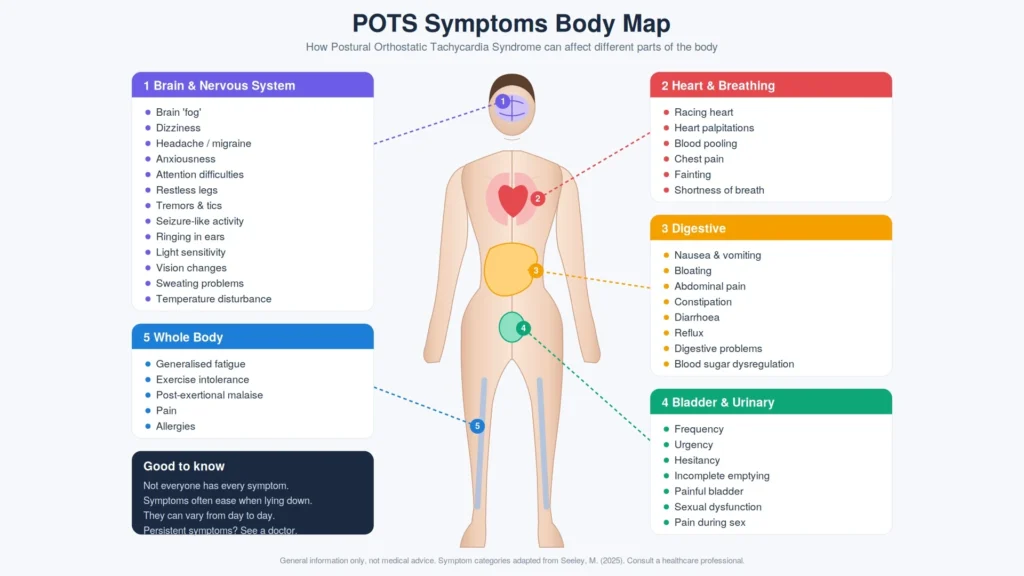
Common POTS Symptoms
POTS symptoms vary widely from person to person, and they can change from day to day. That unpredictability is one reason diagnosis often takes time.
Heart and circulation
- A racing or pounding heart (heart palpitations) on standing
- Lightheadedness or feeling close to fainting
- Chest discomfort
- Shortness of breath
- Cold or purple-tinged hands and feet
- Shakiness
Brain and nervous system
- Brain fog: trouble concentrating, finding words or remembering things
- Headaches or migraines
- Dizziness that eases when you lie down
Digestion, fatigue, temperature, bladder and vision
- Nausea, bloating or stomach discomfort, especially after meals
- Persistent fatigue that sleep doesn’t fix (many people describe it as similar to chronic fatigue)
- Heat intolerance and excessive or reduced sweating
- Frequent urination
- Blurred or tunnel vision when standing
Not everyone has every symptom. If several of these sound familiar, it’s worth discussing them with a healthcare professional.
What Causes POTS? Common Triggers
There isn’t a single cause of POTS. Researchers believe several different mechanisms can lead to the same pattern of symptoms, which is why two people with POTS may have quite different experiences.
Viral infections and long COVID
Many people first notice POTS after an infection such as the flu, glandular fever or COVID-19. The link between long COVID and POTS has received a lot of attention. Some people develop POTS-like symptoms weeks or months after a COVID-19 infection. Research is ongoing, so if you’ve developed new symptoms after an illness, mention it to your doctor.
Surgery, injury and concussion
Physical stress to the body, such as an operation, serious injury or head injury, can sometimes set off POTS. Pregnancy and major life stressors have also been reported as triggers for some people.
Hormonal changes
Because POTS is more common in women, hormones are thought to play a role. Some people notice symptoms vary with their menstrual cycle, with symptoms worsening around their period. This is something to track and share with your care team.
Link with hypermobile Ehlers-Danlos syndrome
Many people with POTS also have unusually flexible joints, and a significant number have hypermobile Ehlers-Danlos syndrome (hEDS) or hypermobility spectrum disorder. The exact reason isn’t fully understood, but it may relate to blood vessels that stretch more than usual and allow blood to pool. If you have both, your doctors can tailor your care accordingly.
POTS vs Anxiety, Dehydration and Fainting
Because POTS involves a racing heart and shakiness, it’s often mistaken for something else. Many people are first told it’s “just anxiety,” which can be deeply frustrating. Here’s how they differ in general terms.
POTS vs anxiety: Anxiety usually begins with a worrying thought or feeling that then triggers physical symptoms. In POTS, the physical symptoms come first, triggered by posture, and they often settle when you lie down. That said, living with POTS can understandably cause anxiety, and the two can coexist.
POTS vs dehydration: Dehydration can cause a fast heart rate and dizziness on standing, but it improves with fluids and rest. POTS symptoms persist even when you’re well hydrated, although fluids often help.
POTS vs ordinary fainting: Common fainting (vasovagal syncope) usually involves a sudden drop in heart rate and blood pressure. In POTS, the heart rate climbs rather than drops, and many people feel faint but don’t actually pass out. Some do faint, though, so fainting doesn’t rule POTS out.
Only a healthcare professional can tell these conditions apart, and proper testing is what makes the difference.
How Is POTS Diagnosed?
There’s no single blood test for POTS. Diagnosis rests on measuring how your heart rate and blood pressure respond to standing, and on ruling out other conditions.
Active stand test
In this simple test, you lie down for several minutes while your heart rate and blood pressure are recorded. You then stand up, and measurements are taken at regular intervals, usually for up to 10 minutes. A version of this is the NASA lean test, where you lean against a wall rather than stand freely. Both can be done in a clinic.
Tilt table test
For this test, you lie on a table that is slowly tilted upright while your heart rate and blood pressure are monitored. It’s usually done in a specialist clinic and may be used when the diagnosis is unclear or fainting is a major feature.
Diagnostic criteria (as a checklist)
Doctors generally look for the following. Exact thresholds can vary between guidelines, so your doctor will interpret your results:
- ☐ A sustained heart-rate increase of about 30 beats per minute or more within 10 minutes of standing (about 40 or more for teenagers aged 12 to 19)
- ☐ No significant drop in blood pressure on standing (which would point to a different condition, called orthostatic hypotension)
- ☐ Symptoms of orthostatic intolerance that have lasted around three months or longer
- ☐ No other obvious explanation, such as anemia, thyroid problems, medication effects, infection or dehydration
Holter monitor and echocardiogram
Your doctor may also order tests to check your heart and rule out other causes:
- A Holter monitor records your heart rhythm over 24 hours or longer.
- An echocardiogram is an ultrasound that looks at your heart’s structure.
- Blood tests can check for anemia, thyroid issues and other conditions.
Some clinics also use questionnaires, such as the Malmö POTS survey, to help assess symptoms. If you suspect POTS, a cardiologist or autonomic specialist is often the best person to see.
How Is POTS Managed?
There is no single cure, but POTS treatment usually combines several approaches. The goal is to reduce symptoms and help you do more of what you want to do. What works varies from person to person, so any plan should be developed with your healthcare team.
Lifestyle changes and trigger avoidance
Start by noticing what makes your symptoms worse. Common triggers include standing still for long periods, hot environments, big meals, alcohol, dehydration, lack of sleep and rushing from lying to standing. Rising slowly, sitting down at the first sign of symptoms and keeping a simple symptom diary can all help.
Salt and fluids (under medical supervision)
Many people with POTS are advised to increase their fluid and salt intake to boost blood volume. This is a popular part of POTS diet advice, and many people find that electrolyte drinks help. However, the right amount differs for everyone, and extra salt isn’t safe for people with high blood pressure, kidney problems or certain heart conditions. Please talk to your doctor before changing how much salt or fluid you take. This article can’t tell you what amount is right for you.
Compression wear
Compression garments, such as waist-high stockings or abdominal binders, help prevent blood from pooling in the legs and abdomen. Many people find them useful, especially when they have to stand or sit upright for a long time. A healthcare professional or specialist fitter can help you choose the right type and strength.
Gentle exercise and reconditioning
It may feel backwards, but POTS exercise can be one of the most helpful treatments. Spending long periods resting can lead to deconditioning, which makes symptoms worse. Programs often begin with exercises done lying or seated, such as recumbent biking, rowing or swimming, and build up very gradually. Standing exercise is added later as tolerance improves.
The key is to go slowly and avoid pushing too hard. Ask your doctor or a physiotherapist experienced in POTS to help design a plan that suits you.
Medications (for information only)
Medication isn’t needed by everyone, and there’s no single drug approved specifically for POTS in many countries. Doctors sometimes use medicines off-label to target particular symptoms. Examples you may hear about include:
- Fludrocortisone, which helps the body retain salt and water
- Midodrine, which tightens blood vessels
- Propranolol (a beta blocker), which can slow the heart rate
- Ivabradine, which lowers heart rate by a different mechanism
Each has potential benefits and side effects, and the right choice depends on your symptoms and health history. This list is for general awareness only. Never start, stop or adjust a medicine without speaking to your doctor or pharmacist.
Breathing and mindfulness techniques
Slow, steady breathing can calm the nervous system and may ease palpitations and dizziness in the moment. Many people also find that mindfulness, gentle yoga or relaxation exercises help them cope with the stress of a chronic condition. These tools don’t replace medical care, but they can be a valuable addition.
Daily Life Tips for Living with POTS
Living with POTS is often about small adjustments that add up. Here are some practical ideas, many of which are shared by people with the condition. Check with your care team about what suits you.
Hot weather: Heat widens blood vessels and can make symptoms worse. Stay in shade or air conditioning when you can, keep a cool drink handy and consider a cooling towel or portable fan.
Showering: Hot water and standing still are a tough combination. Many people use a shower chair, keep the water lukewarm and sit down to wash their hair or dry off.
Meals: Large meals can pull blood toward the gut and trigger symptoms. Smaller, more frequent meals may feel easier. Some people notice that heavy carbohydrates or alcohol make things worse.
Travel: Plan ahead for airports and long journeys. Wear compression garments, carry water, stand up slowly and request assistance if you need it. Having your doctor’s letter handy can help.
Sleep: Poor sleep worsens POTS symptoms for many people. Try keeping a regular schedule and a cool, dark bedroom. Some people raise the head of the bed, but ask your doctor first.
Pacing: Energy can be unpredictable. Spreading tasks across the day and building in rest breaks helps prevent the “boom and bust” cycle.
POTS at School, University and Work
POTS can make long days difficult, but with the right support many people continue their studies and careers.
At school or university, it can help to talk to the student support or disability services team about adjustments. These might include permission to carry water, sit during assemblies, use a lift, take rest breaks or have extra time in exams.
At work, flexible hours, remote working, a supportive chair or a workspace near a bathroom and cool area can make a big difference. Depending on where you live, you may have legal rights to reasonable adjustments. A letter from your doctor can help you start the conversation.
When to See a Doctor
Many symptoms of POTS overlap with other conditions, so it’s important to get a proper evaluation rather than guessing. Make an appointment if you regularly experience lightheadedness, a racing heart or unexplained fatigue when standing.
Seek urgent medical attention (call emergency services) if you have:
- Chest pain that is severe, crushing or doesn’t settle
- Fainting with no warning, especially if you injure yourself
- Fainting during exercise
- Severe shortness of breath
- A heart rate that stays very fast and doesn’t settle when you rest
- Sudden weakness, confusion, trouble speaking or one-sided numbness
- A strong, sudden headache unlike any you’ve had before
When in doubt, it’s always better to get checked.
Outlook: Can POTS Improve?
Living with a chronic condition can feel overwhelming, but there is real reason for hope. Many people see their symptoms improve over time, especially with a consistent management plan. Some recover almost fully, particularly when POTS began after a temporary trigger such as an infection. Others continue to have symptoms but learn to manage them well and live full lives.
Progress is rarely a straight line. Good days and bad days are normal, and setbacks don’t mean you’re failing. Working with a doctor who takes your symptoms seriously, and finding others who understand, can make a big difference.
Conclusion
POTS syndrome can turn simple tasks like standing, showering or walking to the shops into a challenge, but it is real, recognised and treatable. Understanding your triggers, working with a knowledgeable healthcare team and making steady lifestyle changes can lead to meaningful improvement.
If you recognise yourself in this article, the next step is to book an appointment and describe your symptoms clearly. Consider connecting with a patient support community too. You don’t have to figure this out alone.
Medical disclaimer: This article is for general information and education only. It is not medical advice and isn’t a substitute for professional diagnosis or treatment. Always consult a qualified healthcare professional about your symptoms, and before changing your diet, salt or fluid intake, exercise routine or medications.
FAQs
No. POTS is a physical condition affecting the autonomic nervous system. It can cause symptoms that feel similar to anxiety, such as a racing heart and shakiness, but the cause is different. Anxiety can also accompany POTS, so a doctor can help sort out what’s going on.
For most people, gradual, carefully structured exercise is a key part of treatment. Starting with seated or reclined exercise and building slowly is usually recommended. Speak to your doctor or a physiotherapist before beginning.
There’s no one-size-fits-all answer. The right amounts depend on your health, medications and blood pressure. Your doctor can advise you based on your situation.
Not always. Some people recover completely, others improve substantially, and some live with long-term symptoms. Outcomes vary, so it’s best to discuss your own outlook with your care team.
Yes. Some people develop POTS or POTS-like symptoms after a COVID-19 infection, and it’s considered one feature of long COVID. If you notice new symptoms after being ill, see your doctor.

Leave a Reply